

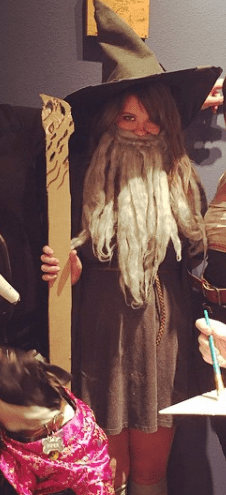
Halloween: one of a few nights of the year where you can go all out and nobody BATS an eye (to be clear that was a halloween pun). There are the folks that make flawless costumes from scratch. There are the funny ones who cleverly take advantage of some random joke and whip something up days in advance. Then there are the horror freaks; covered in fake blood like a Rob Zombie movie. Then there are the folks like me who know they are going to a party and tell themselves “I’ll think of something” then when the party rolls around and no costume has been committed to are upset at themselves for not doing anything worthy of compliments and validation. One year though I was sexy Gandalf which was pretty cool.
Costumes, trick-or-treating, bonfires, and making out with a stranger in your cousin’s ex-boyfriend’s college roommate’s kitchen at a party you pre-gamed too hard for are all Halloween rituals. Aside from that last one, they all come from one ancient celebration: Samhain.
Traditionally taking place halfway between the Autumn Equinox and the Winter Solstice, Samhain (pronounced “Sau-In” cause Gaelic is like that) was the ancient celebration held before the world turned to Winter. Massive bonfires are lit, and prayers are sent to the heavens to ask for a safe winter. Samhain was particularly important because many of the ancient tribes were herdsmen and depended on livestock. At this time, farmers brought herds and flocks back from their summer pastures.
In modern times it is celebrated from October 31-November 1, beginning in the evening on the 31st. Why the evening? Celtic days began at sunset. Plus-and this might totally be the esteemed author’s projection-bonfires are fun at night.
Samhain is when the line between our world and the Otherworld is at its thinnest. That means spirits and fairies can come into the world more easily and cause quite a ruckus. If you’re thinking fairies are sweet little Tinkerbells then you are MONSTROUSLY wrong (another Halloween pun), they’re dangerous and want to cause harm and mischief. Time stands still on Samhain and almost everyone out and about that evening is a spirit. It is advised to stay inside until a great fire is lit, and then to transfer part of that fire to your home. Once that is done, and you are sufficiently costumed, you might just be safe from the Otherworld spirits. Some stories say these costumed pagans went door-to-door, asking for treats for their Ancestors. Hence: trick-or-treating! This tradition became more prevalent centuries later in England when poor children and families would visit moneyed homes, perform a poem or song, and receive some food.
While I was researching for this post, I found numerous sources about Samhain traditions. Some of it disputed one another, so I’ve compiled a quick bullet list on rituals I found general consensus on:
- Samhain is one of four seasonal festivals. Bealtaine, the Summer festival, is the other well known one. Samhain would be the first seasonal festival of the year, as Winter was the beginning of the year in Celtic culture.
- The Great Fire Festival was held at Tlachtga. A massive bonfire was lit that could be seen for miles. It was said that until one’s fire at their home was sourced from the Tlachtga fire, one would not be safe. Over time this rule became symbolic, as each village or town had their own fire. The featured image of this post shows an illustration of the Hill of Ward, where the fire was lit every Samhain.
- During Samhain and Bealtaine, portals to the Otherworld were opened. Samhain celebrated Winter though, the dark part of the year, so the spirits coming from the Otherworld are similarly dark in nature. Firebreathers, fairies, and other dark, spooky beings of the Otherworld emerge to cause mischief and destruction. One tale, Acallam na Senorach, describes three female werewolves who come above to the realm of the living on Samhain to kill livestock. Remember now that some of the ancient tribes were dependent on their livestock, so wanton killing by she-wolves really isn’t great for the ancient economy.
- What do you do when you don’t want murderous beings of the Otherworld threatening you, your home, your family, and your livestock? You offer them something. Legend has it that in the town of Nemed, folks sacrificed two-thirds of their children, corn, and milk to the Fomorians. The Fomorians, a fearsome race belonging to the Otherworld, represented darkness and blight. Pleasing those DAMNED (third pun of the post) Fomorians was of utmost importance. Human sacrifices have been documented, and some of the Irish bog bodies have been suspected to be Irish Kings ritually sacrificed by wounding, burning, and drowning to appease the spirits.
- Ancestor worship was particularly important during Samhain. Food was prepared for the Ancestors and their spirits were invited into family homes. This lead to a pretty big problem: the harmful spirits of the Otherworld were out there mingling with the friendly ancestors. Thus, a smart pagan would make a scary costume. Not to scare away the harmful spirits, but to blend in with them and not be disturbed.
These traditions persevere through time. In the Catholic Church, All Soul’s Day is held on November 2 and celebrates the souls of the dearly departed. Because Samhain’s origins are in Ireland, Scotland, and the Isle of Man, it is no surprise that immigrants from those countries brought over some of these traditions, particularly during the Irish potato famine of the 1860s. The rituals became popular through the Industrial era and into the 20th century, though mischief did spike in the 1930s during the Great Depression. By the 1970s, companies were capitalizing on trick-or-treaters and started mass producing costumes based on popular TV and movie characters. As time goes on, new variations on these traditions will arise, but they all surely have roots in Samhain.
 Punk Prana